
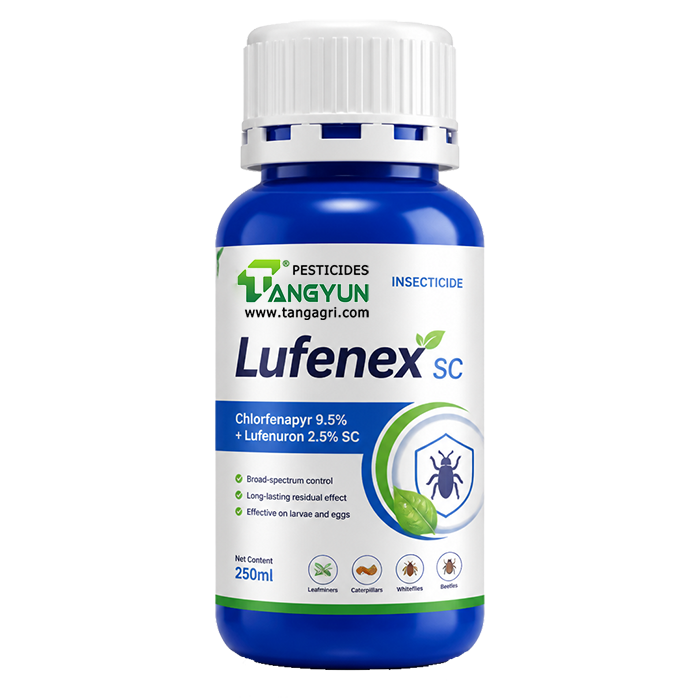
Chlorfenapyr + Lufenuron: Kills both eggs and larvae
Combination principle: Chlorfenapyr quickly kills larvae; lufenuron kills eggs and inhibits molting, making up for the weakness that chlorfenapyr cannot kill eggs.
Application: Prevent outbreaks at the early stage in pests such as diamondback moth and beet armyworm.
Reference dosage: Spray after diluting with water according to the label instructions of purchased products (e.g. 30 g of 12% compound formulation mixed with 15–20 kg water for uniform spraying).
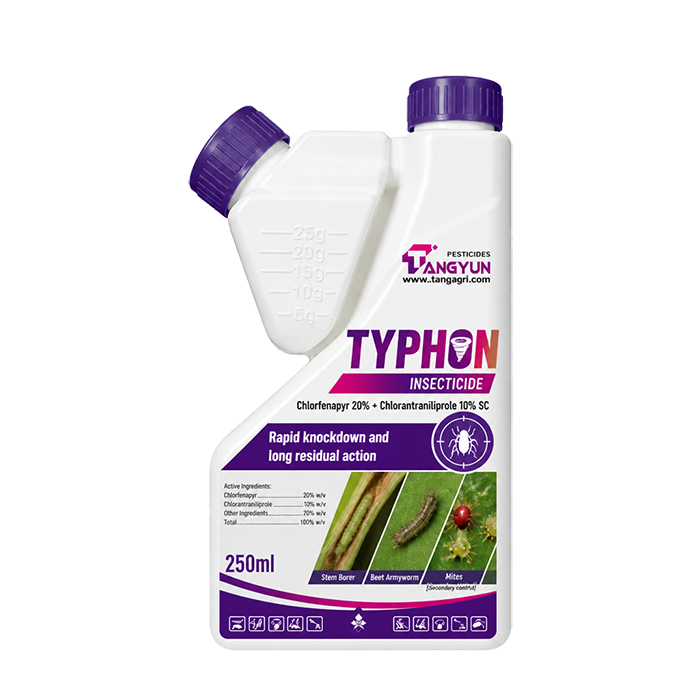
Chlorfenapyr + Chlorantraniliprole: Fast action plus long residual effect
Combination principle: Chlorfenapyr knocks down pests rapidly; chlorantraniliprole has systemic activity and long residual effect, targeting boring pests.
Application: Apply in fields with mid- to late-stage pest infestation, older larvae, or severe pest resistance.
Reference dosage: Spray after diluting with water as specified on the product label.
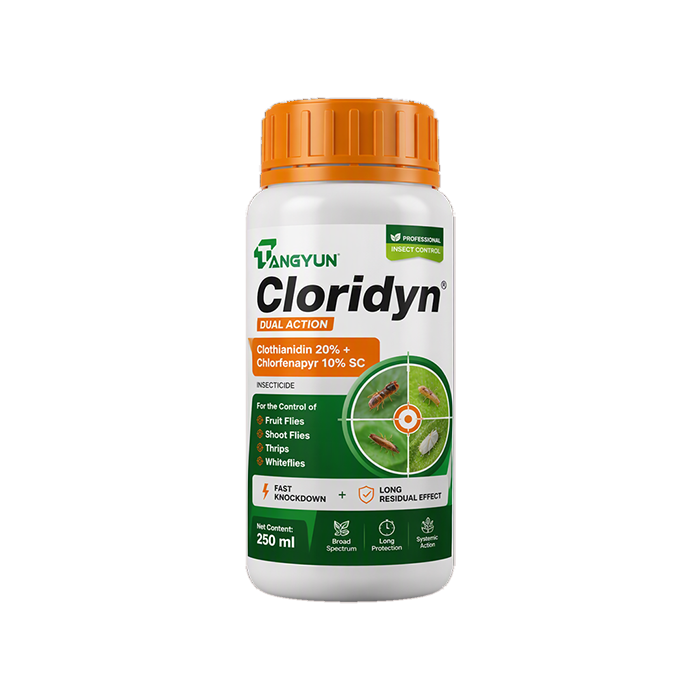
Chlorfenapyr + Clothianidin: Control both above-ground and underground pests
Combination principle: Chlorfenapyr controls above-ground piercing-sucking and leaf-eating pests; clothianidin has strong systemic property and can be applied by root irrigation to control underground pests.
Application: Fields with mixed infestation of thrips and cabbage caterpillars, accompanied by underground pests such as root maggots.
Reference dosage: Follow label instructions for foliar spray; for fertigation and root irrigation, the reference dosage is 3000 mL/ha.
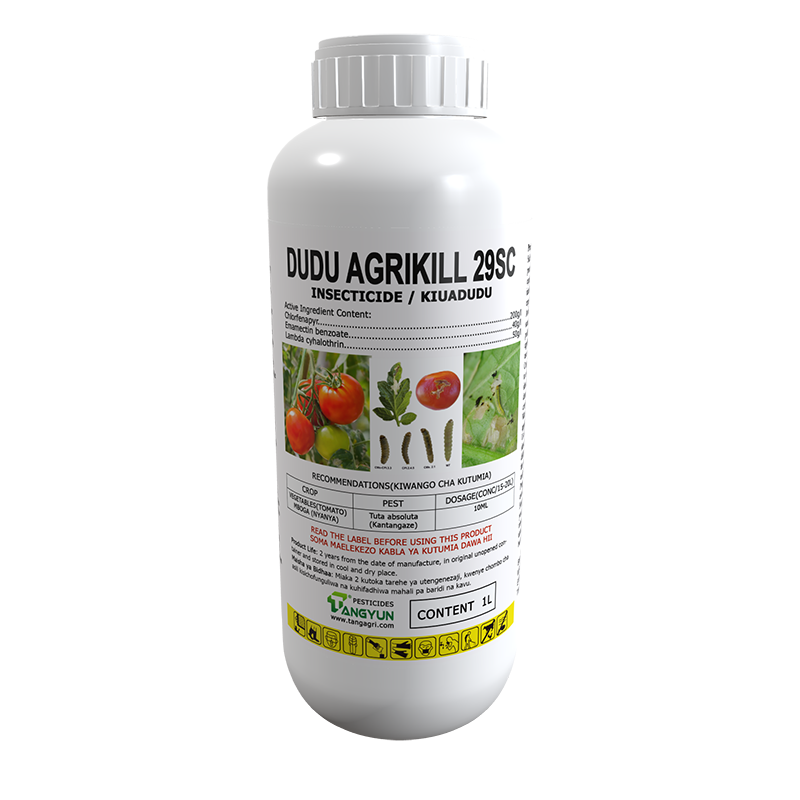
Chlorfenapyr + Emamectin benzoate: For highly resistant noctuid moths
Combination principle: Chlorfenapyr delivers fast knockdown; emamectin benzoate enhances efficacy and extends residual control, providing stable control against beet armyworm and Spodoptera litura.
Application: Fields with peak outbreaks of noctuid moths or heavy pest resistance.
Reference dosage: Spray after dilution with water, reference rate 600–675 mL/ha (12% emamectin benzoate·chlorfenapyr formulation).
Chlorfenapyr + Abamectin: Preferred mite control mixture for orchards
Combination principle: Abamectin kills adult mites; chlorfenapyr targets young mites to suppress both red mites and white mites.
Application: Orchards with outbreaks of red mites and white mites, or mixed infestation of highly resistant thrips and cabbage caterpillars.
Reference dosage: Dilute and spray according to the recommended dilution ratio on the label (e.g., 1000–1500 times dilution for 14% abamectin·chlorfenapyr).
Note: Due to differences in regions, crop growth status, and pest conditions, the specific pesticide application varies greatly. It is recommended to consult local agricultural technicians or professional plant protection personnel to ensure safe and effective pesticide use. You may consult local agricultural extension stations, plant protection specialists, or authorized agricultural chemical dealers, or refer to authoritative guidance issued by local agricultural and rural bureaus.
Post time: Oct-13-2026

