
Spinosad

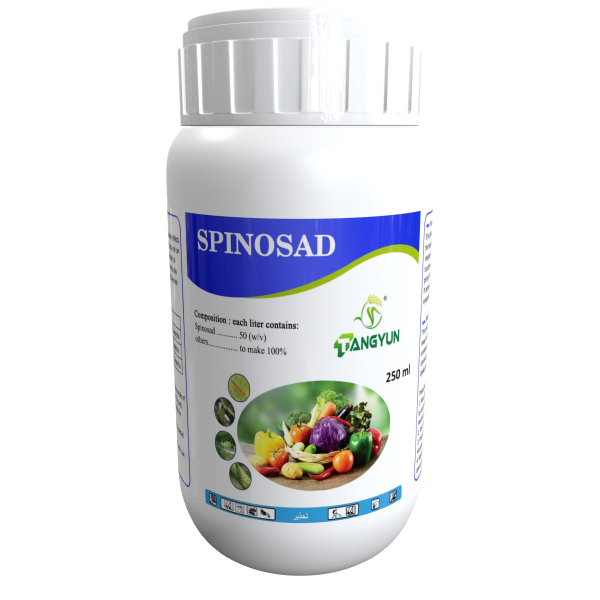


Tech Grade: 92%TC
|
Specification |
Object of prevention |
Dosage |
| Spinosad 5% SC |
Diamondback moth on cabbage |
375-525ml/ha. |
| Spinosad 48% SC |
Bollworm on cotton |
60-80ml/ha. |
| Spinosad 10% WDG |
Rice leaf roller on rice |
370-450g/ha |
| Spinosad 20% WDG |
Rice leaf roller on rice |
270-330g/ha |
| Spinosad 6%+Emamectin Benzoate 4% WDG |
Rice leaf roller on rice |
180-240g/ha. |
| Spinosad 16%+Emamectin Benzoate 4% SC |
Exigua moth on cabbage |
45-60ml/ha. |
| Spinosad 2.5%+Indoxacarb 12.5% SC |
Diamondback moth on cabbage |
225-300ml/ha. |
| Spinosad 2.5%+chlorantraniliprole 10% SC |
Rice Stem Borer |
200-250ml/ha. |
| Spinosad 10%+Thiamethoxam 20% SC |
Thrips on vegetables |
100-210ml/ha. |
| Spinosad 2%+Chlorfenapyr 10% SC |
Diamondback moth on cabbage |
450-600ml/ha. |
| Spinosad 5%+Lufenuron 10% SC |
Diamondback moth on cabbage |
150-300ml/ha. |
| Spinosad 5%+Thiocyclam 30% OD |
Thrips on cucumber |
225-375g/ha |
| Spinosad 2%+Abamectin 3% EW |
Diamondback moth on cabbage |
375-450ml/ha. |
| Spinosad 2%+Imidacloprid 8% SC |
Thrips on eggplant |
300-450ml/ha. |
Technical requirements for use:
1. Application period: Apply the pesticide at the peak stage of young nymphs of thrips and the young stage of diamondback moth larvae. The recommended watering amount for melons is 600-900 kg/ha; for cauliflower, the recommended watering amount is 450-750 kg/ha; or based on the actual watering of local agricultural production, the entire crop should be sprayed evenly.
2. Do not apply pesticides on windy days or if it is expected to rain within 1 hour.
3. Before promotion and use, small-scale crop safety tests should be carried out on zucchini, cauliflower, and cowpea.
4. The safe interval for melons is 3 days, with a maximum of 2 uses per season; the safe interval for cauliflower is 5 days, with a maximum of 1 use per season; the safe interval for cowpeas is 5 days, with a maximum of 2 times per season use 1 time.


