
2,4-D herbicide is one of the most widely used herbicides for controlling broadleaf weeds in agricultural and non-agricultural areas. It is commonly used in crops, pastures, lawns, turf, roadsides and other areas where broadleaf weed control is required.
For farmers, turf managers and professional weed control operators, 2,4-D is widely recognized as an effective broadleaf weed killer and an important tool for selective weed management.
What Is 2,4-D Herbicide?
2,4-D, also known as 2,4-dichlorophenoxyacetic acid, is a synthetic auxin herbicide. It works by disrupting normal plant growth, causing susceptible broadleaf weeds to grow abnormally and eventually die.
2,4-D primarily targets broadleaf weeds and generally does not control most established grass species. This selective activity is one of the main reasons why 2,4-D herbicides are widely used in crops, lawns, turf and pasture systems.
What Is 2,4-D Herbicide Used For?
The main use of 2,4-D herbicide is broadleaf weed control.
Common applications include:
- Corn and other cereal crops
- Wheat and small grains
- Pastures and rangelands
- Residential lawns and turf
- Roadsides and rights-of-way
- Industrial and non-crop areas
- Forestry and vegetation management
- Certain aquatic weed management applications
The exact crops, weeds and application methods permitted for a 2,4-D product depend on the product label and local regulations.
2,4-D for Broadleaf Weed Control
2,4-D is particularly useful for controlling many annual and perennial broadleaf weeds.
Common target weeds may include:
- Dandelion
- Plantain
- Chickweed
- Ragweed
- Pigweed
- Thistle
- Wild garlic
- Wild onion
- Bindweed
- Other susceptible broadleaf weeds
Because weed susceptibility varies by species and growth stage, users should always select a product and application program according to the registered label.
2,4-D Herbicide for Agriculture
2,4-D is widely used in agricultural weed management.
It has applications in crops such as corn, wheat, sorghum and other cereal crops. In some crop systems, 2,4-D may be used before planting or after weed emergence, depending on the specific formulation, crop and product label.
For farmers, one of the major advantages of 2,4-D is its ability to control susceptible broadleaf weeds while preserving many established grass crops when used according to the label.
2,4-D Herbicide for Lawns and Turf
2,4-D is also commonly used for broadleaf weed control in lawns, turfgrass, parks, sports fields and similar areas.
It can help manage common lawn weeds such as dandelion, plantain and other susceptible broadleaf weeds.
However, turfgrass tolerance varies. Some turf species can be sensitive to 2,4-D products, so the product label should always be checked before application.
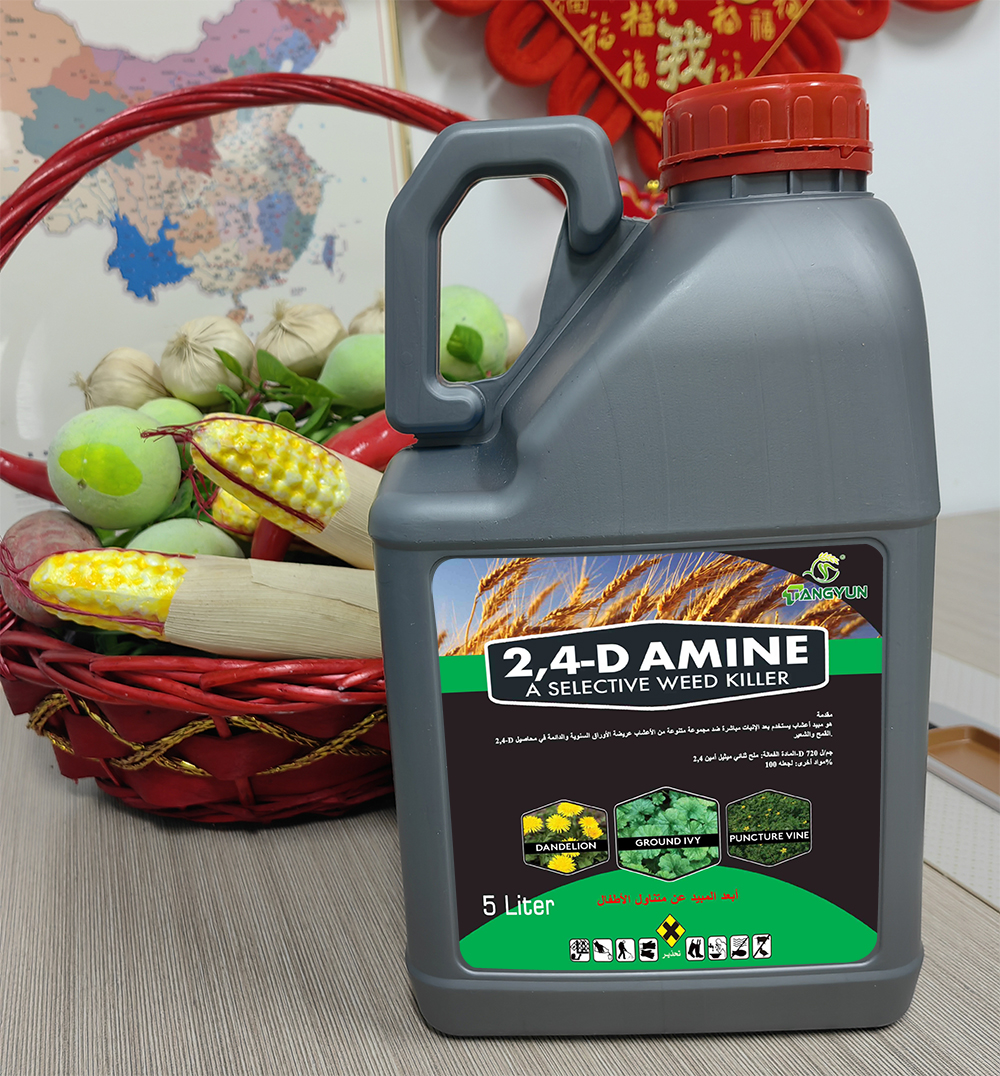
2,4-D Amine vs. 2,4-D Ester
2,4-D herbicides are available in different formulations, including amine salts and ester formulations.
The formulation can affect characteristics such as volatility, plant uptake, handling and appropriate application conditions.
For this reason, choosing the right 2,4-D formulation is important for effective weed control and minimizing the risk of unwanted movement or damage to sensitive plants.
Why Is 2,4-D Still Widely Used?
Several factors contribute to the continued use of 2,4-D herbicides:
- Effective control of many broadleaf weeds
- Wide range of agricultural applications
- Use in turf and pasture management
- Availability in multiple formulations
- Compatibility with different weed management programs
- Long history of agricultural and professional use
2,4-D products are available as liquids, concentrates, ready-to-use products and granular formulations, depending on the market and application.
2,4-D Herbicide Supplier and Manufacturer
When purchasing 2,4-D herbicide, buyers should consider more than the active ingredient concentration.
Important factors include:
- Active ingredient form
- Formulation type
- Product stability
- Packaging
- Registration status
- Quality control
- Batch consistency
- Export documentation
- Local regulatory requirements
For distributors and agricultural chemical companies, selecting a reliable 2,4-D herbicide manufacturer or supplier is important for maintaining consistent product quality and supply.
2,4-D Herbicide: Frequently Asked Questions
What weeds does 2,4-D control?
2,4-D is primarily used to control susceptible broadleaf weeds. It does not generally provide broad-spectrum control of established grass weeds.
Is 2,4-D a selective herbicide?
Yes. 2,4-D is commonly classified as a selective herbicide because it primarily targets broadleaf plants while many established grasses have greater tolerance.
Where is 2,4-D used?
2,4-D is used in agricultural crops, pastures, rangelands, lawns, turf, roadsides, rights-of-way and other approved sites.
What is 2,4-D amine?
2,4-D amine refers to formulations in which 2,4-D is present as an amine salt. Different 2,4-D formulations have different properties and label requirements.
Can 2,4-D be used on every crop?
No. 2,4-D products are not universally approved for every crop. Users should always follow the specific product label and applicable local regulations.
Conclusion
2,4-D herbicide remains an important tool for broadleaf weed control in agriculture, turf, pasture and non-crop areas.
Its wide range of applications and availability in different formulations make it a commonly used herbicide for professional weed management.
For buyers looking for a 2,4-D herbicide supplier or manufacturer, product formulation, quality consistency, regulatory compliance and application requirements should all be considered when selecting a product.
Post time: Sep-08-2026

