
1: One Target, Triple Strike
The mechanism of action of fipronil deserves in-depth understanding by every user.
It acts on the GABA chloride ion channels of the insect’s nervous system, inhibiting normal chloride ion conduction, causing over-excitation of the insect’s central nervous system, ultimately leading to convulsions and death. This unique mode of action means it has no cross-resistance with traditional insecticides and remains highly effective against resistant pests.
More importantly, fipronil possesses a triple mode of action: stomach poison, contact, and moderate systemic action.
This means that whether pests ingest, come into contact with, or hide within plant tissues, they cannot escape its control.
This multi-dimensional attack capability greatly enhances the flexibility and reliability of field applications.
2: Broad Spectrum and High Efficiency, One Bottle Covers Multiple Pests
For users, the broad spectrum of a product directly affects procurement costs and storage efficiency.
Fipronil excels in this regard, exhibiting excellent control efficacy against a variety of pests, including Lepidoptera, Homoptera, Coleoptera, and Diptera.
Whether it’s the rice stem borer on rice, the root leaf beetle on corn, or the diamondback moth and thrips on vegetables, fipronil provides stable and reliable control.
In short, having one bottle of this pesticide eliminates the hassle of frequent pesticide changes and makes pest control more efficient and effective.
3: Long-lasting protection, reduced labor intensity
Another major feature of fipronil is its excellent long-lasting effect. A single application provides continuous protection for a considerable period.
This not only reduces the number of applications in the field but, more importantly, lowers farmers’ physical labor and pesticide costs, truly achieving labor-saving, effort-saving, and cost-effective results.
4: Controllable risks, scientific use is key
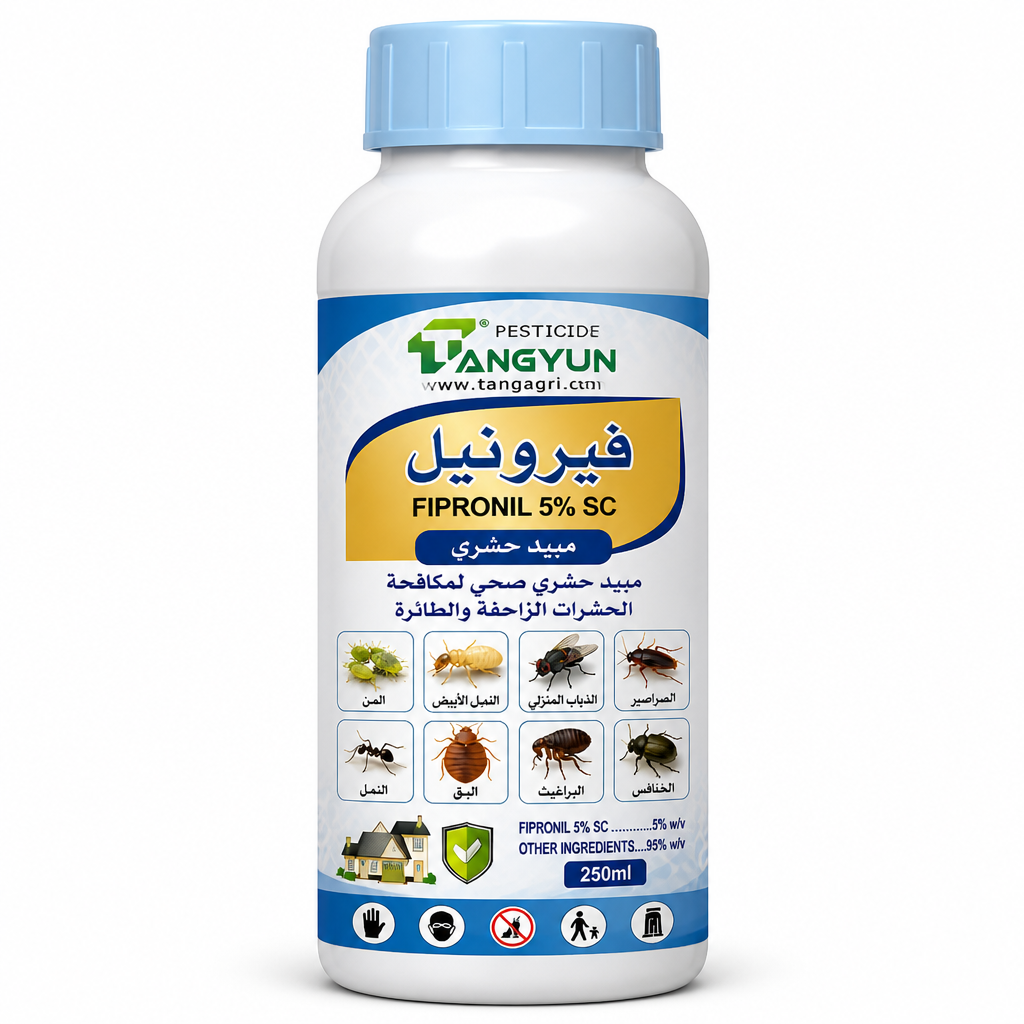
Currently, it is mainly used legally for the control of sanitary pests (such as termites, cockroaches, and flies), seed coating in some dryland fields, and the control of external parasites in pets.
Post time: Jul-20-2026

