
Spirodiclofen


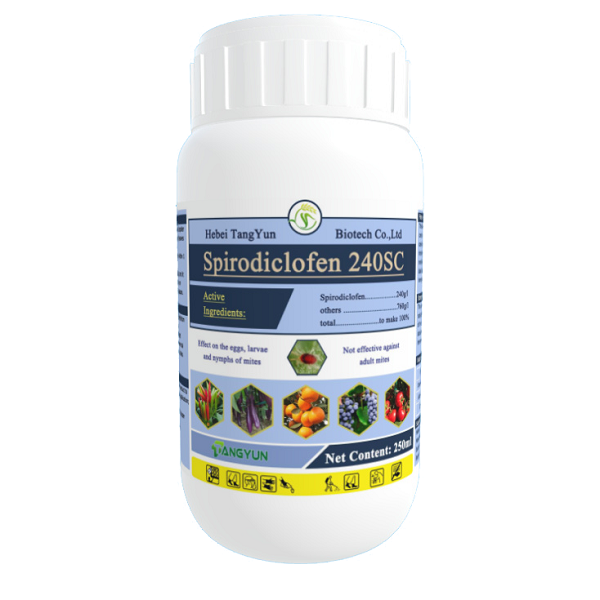


Technical Grade : 98%TC
|
Formulations |
Target |
Dosage |
|
Spirodiclofen 240g/L SC |
Red spider mite |
90-120 ml/ha |
|
Spirodiclofen 34%SC |
Red spider mite |
50-75 ml/ha |
|
Spirodiclofen 13.5%+pyridaben 22.5% SC |
Red spider mite |
110-150 ml/ha |
|
Spirodiclofen 15%+cyetpyrafen 15% SC |
Red spider mite |
120-225 ml/ha |
|
Spirodiclofen 40%+abamectin 5% SC |
Red spider mite |
45-65 ml/ha |
|
Spirodiclofen 25%+lufenuron 15% SC |
Rust mite |
45-65 ml/ha |
|
Spirodiclofen 15%+Profenofos 35% EC |
Red spider mite |
150-225 ml/ha |
|
Spirodiclofen 10%+bifenazate 30% SC |
Red spider mite |
120-225 ml/ha |
|
Spirodiclofen 200g/L+cyflumetofen 200g/L SC |
Red spider mite |
90-120 ml/ha |
|
Spirodiclofen 15%+diafenthiuron 25% SC |
Red spider mite |
120-180 ml/ha |
|
Spirodiclofen 32%+etoxazole 8% SC |
Red spider mite |
65-75 ml/ha |
|
Spirodiclofen 10%+Clofentezine 14% SC |
Red spider mite |
150-225 ml/ha |
|
Spirodiclofen 20%+azocyclotin 25% SC |
Red spider mite |
65-90 ml/ha |
|
Spirodiclofen 5%+fenbutatin oxide 20% SC |
Red spider mite |
225-300 ml/ha |
Technical Requirements for Use:
1. Apply pesticide during the peak infestation period of spider mite larvae and nymphs on citrus trees. Ensure thorough and even coverage on both sides of leaves, fruit surfaces, trunk, and branches. For melons, spray once at the initial stage of spider mite infestation, diluted with 30-40 kg/mu of water. For mung beans, spray at the initial stage of spider mite infestation, diluted with 30-45 kg/mu of water. For kiwifruit, spray once evenly at the initial stage of spider mite infestation.
2. Safety interval and number of applications: 20 days for citrus trees, 7 days for melons, and 21 days for mung beans and kiwifruit. Maximum one application per crop season.
3. Spirodiclofen has a long residual effect and should be applied at the initial stage of spider mite population growth on citrus trees. Strictly adhere to the dosage instructions for spraying.
4. Do not apply pesticides on windy days or if rain is expected within one hour.
Product Performance: Spirodiclofen is a non-systemic acaricide, primarily controlling eggs, nymphs, and adult female mites through contact and stomach poison action. Its mechanism of action is to inhibit fat synthesis and block energy metabolism in the mites. It exhibits no cross-resistance with conventional acaricides and is used to control spider mites on citrus trees, melons, mung beans, and kiwifruit.
Precautions:
1. To avoid mites developing resistance, it is recommended to rotate with other acaricides with different mechanisms of action.
2. Pesticide packaging waste must not be discarded or disposed of arbitrarily. It should be promptly returned to pesticide dealers or pesticide packaging waste recycling stations. Washing application equipment in rivers, ponds, or other bodies of water is prohibited. Residual pesticide solution must not be dumped arbitrarily. It is prohibited in and near aquaculture areas, rivers, ponds, and other bodies of water. It is also prohibited near silkworm rearing rooms and mulberry orchards.
3. When preparing and applying this product, wear protective clothing, gloves, and a mask. Smoking and eating are strictly prohibited. Do not eat or drink during application. After applying the medication, wash hands, face, and other exposed body parts, as well as clothing contaminated with the medication, with soap and plenty of water.
4. Avoid contact with this product for pregnant and breastfeeding women.


