Boscalid



Tech Grade: 98%TC
|
Formulations |
Target |
Dosage |
| Boscalid50%WDG | gray mold | 450-750g/ha |
| Boscalid43%SC | stalk break | 525-825ml/ha |
|
Boscalid20%+cyprodinil50%WDG |
powdery mildew |
10g within 5L-10L water |
|
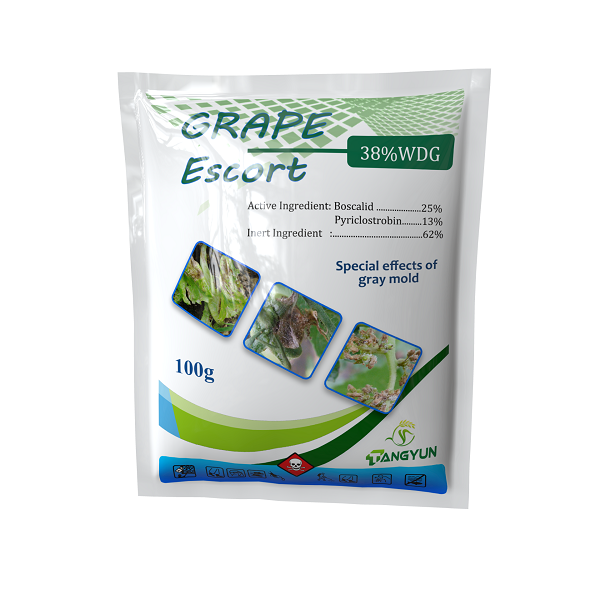
Boscalid25.2%+pyraclostrobin12.8%WDG |
southern blight |
1350-1800g/ha |
|
Boscalid45%+fludioxonil15%WDG |
gray mold |
10g within 10L-20L water |
|
Boscalid20%+procymidone45%WDG |
gray mold |
900-1200g/ha |
|
Boscalid35%+trifloxystrobin15%WDG |
powdery mildew |
10g within 10L-15L water |
|
Boscalid25%+iprodione40%WDG |
gray mold |
315-360g/ha |
|
Boscalid30%+pyrimethanil40%WDG |
gray mold |
600-900g/ha |
|
Boscalid30%+pyraclostrobin15%SC |
gray mold |
450-525ml/ha |
|
Boscalid25%+diethofencarb25%SC |
gray mold |
750-900ml/ha |
|
Boscalid15%+iprodione20%SC |
gray mold |
10ml within 8L-10L water |
|
Boscalid24%+fludioxonil6%SC |
gray mold |
450-900ml/ha |
|
Boscalid30%+pyraclostrobin15%SC |
gray mold |
375-525ml/ha |
|
Boscalid10%+procymidone30%SC |
gray mold |
1200-1800ml/ha |
|
Boscalid15%+pyrisoxazole10%SC |
gray mold |
1000-1400ml/ha |
|
Boscalid20%+cyprodinil10%SC |
gray mold |
450-600ml/ha |
|
Boscalid25%+triflumizole10%SC |
powdery mildew |
360-720ml/ha |
|
Boscalid15%+azoxystrobin30%SC |
gray mold |
600-900ml/ha |
|
Boscalid200g/L+kresoxim-methyl100g/LSC |
powdery mildew |
675-900ml/ha |
|
Boscalid42%+trifloxystrobin14%SC |
powdery mildew |
225-300ml/ha |
Applicaton:
1.Vegetables (Tomato, Cucumber, Pepper, Eggplant)
Target Diseases: Gray mold, sclerotinia rot, powdery mildew, early blight, leaf spot.
Application Method: Start preventive spraying at the early flowering stage and fruit setting stage. Spray evenly on leaves, stems, flowers and young fruits. Complete coverage of flower clusters and fruit surfaces is essential for gray mold control.
Apply every 7–10 days during humid and rainy weather. A total of 2–3 applications are recommended per growing season. Avoid spraying at high temperature at noon.
2.Grapes
Target Diseases: Grape gray mold, powdery mildew, ripe rot, anthracnose
Application Method: Apply preventively during new shoot growth, flowering period and fruit expansion stage. Focus on spraying inflorescences, young fruits and both sides of leaves.
It has excellent rainfastness and long-lasting protection. Maintain a 10–12 day spraying interval during disease-prone periods. Stop application 7–10 days before fruit harvesting.
3.Fruit Trees (Apple, Pear, Citrus, Strawberry)
Target Diseases: Strawberry gray mold, powdery mildew; apple and pear leaf spot, Alternaria blotch; citrus anthracnose and scab
Application Method: Perform full crown spraying at the young leaf stage, flowering stage and fruit growth stage. Ensure uniform wetting of new shoots, leaves and fruit surfaces. For strawberries, focus on flower and fruit spraying.
Use 2–3 applications at 8–12 day intervals to achieve stable disease control.
4.Field Crops (Wheat, Rapeseed, Peanut, Soybean)
Target Diseases: Wheat powdery mildew, rust; rapeseed sclerotinia rot; peanut and soybean leaf spot, brown spot
Application Method: Spray foliage evenly at the jointing and heading stage of wheat, and at the flowering and pod-forming stage of oil crops and legumes. Fully wet the upper and middle leaves and stems. One to two times of application during the disease peak period can effectively reduce disease incidence and improve crop yield.
5.Potato and Tuber Crops
Target Diseases: Early blight, leaf spot, gray mold
Application Method: Start preventive spraying at the early tuber expansion stage. Spray uniformly on the whole plant foliage. Keep a 10-day application interval during continuous wet weather.
It can be used alternately with other fungicides to delay resistance and improve control performance.