
I. Introduction
With the acceleration of urbanization and the impact of climate change, sanitary pests such as mosquitoes, flies, cockroaches, and termites pose an increasingly prominent threat to residents’ quality of life and public health. Chemical control remains an important means of pest management, and bifenthrin, with its advantages of high efficiency, low toxicity, and long-lasting effect, has become an important product in the field of sanitary insecticides. Among them, 10% bifenthrin suspension concentrate has been widely promoted in indoor and outdoor pest control due to its stable formulation, convenient use, and reliable efficacy.
II. Product Core Positioning and Characteristics
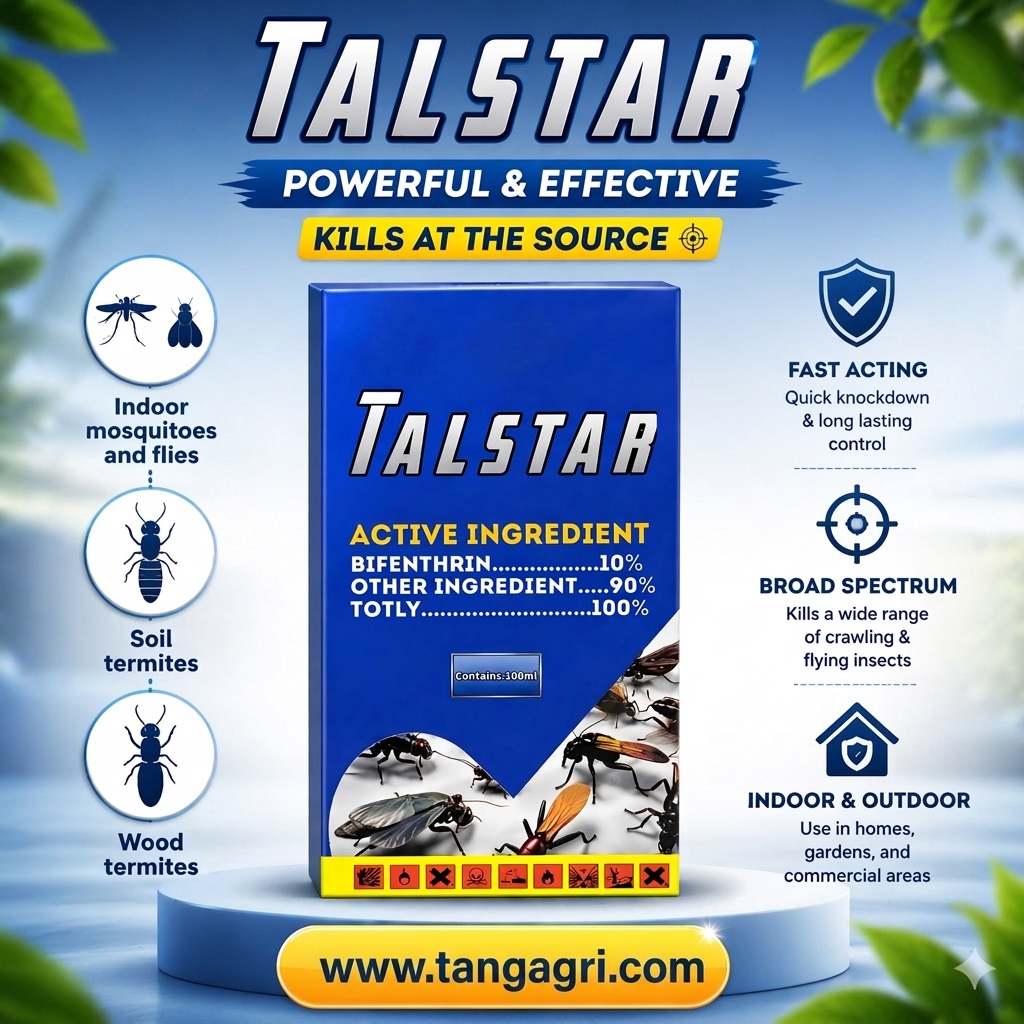
10% Bifenthrin Suspension Concentrate is a broad-spectrum pyrethroid insecticide. Its active ingredient is bifenthrin, with a content of 10%.
This formulation is a low-toxicity product, offering both preventative and curative effects.
Its mechanism of action involves interfering with the sodium ion channels of the insect’s nervous system, leading to rapid paralysis and death.
Bifenthrin has both contact and stomach poison mechanisms of action, providing rapid knockdown and maintaining good efficacy even at lower temperatures.
This characteristic makes it particularly advantageous for pest control during the cold seasons of early spring or late autumn.
Regarding formulation, in addition to conventional suspension concentrates, some products have been upgraded to microencapsulated suspension concentrates,
where the active ingredient is encapsulated in tiny capsules for slow release, significantly extending the duration of effect. Some products claim an effect lasting up to 60 days.
III. Main Target Pests
10% bifenthrin suspension has a broad spectrum of control, covering three main categories of sanitary pests:
Flying pests: Including indoor mosquitoes and flies, this is the primary target for indoor residual spraying.
Crawling pests: It has good control efficacy against cockroaches (drones) and is a commonly used agent for pest control in homes and restaurants.
Structural pests: It has both preventative and curative effects against soil and wood termites, and is widely used for termite protection in building foundations and wooden structures.
This dual-purpose (treating both insects and mites) and multi-functionality makes it highly cost-effective and convenient in practical applications.
IV. Core Application Methods
Indoor Mosquitoes and Flies: Dilute 100-150 times with water, 0.6 ml/m², residual spray on walls, corners, and other pest habitats.
Cockroaches: Dilute 50-150 times with water, focusing on crevices, holes, and areas with high cockroach activity.
Soil Termites: Dilute 40-75 times with water, 18.75-75 ml/m², spray evenly on the soil surface.
Wood Termites: Dilute 160 times with water, treat wood by soaking or brushing.
Residual spraying is the primary method of application for this formulation. After spraying, the solution forms a film on the surface of objects, killing pests upon contact, with a long-lasting effect.
For termite control, it can be used to create a chemical barrier through soil treatment, or by soaking or brushing wood, offering flexible application methods.
V. Formulation Technology Upgrade Directions
To address the increasingly complex needs of pest control and delay the development of resistance, the formulation technology of 10% bifenthrin continues to be upgraded in the following directions:
5.1 Microencapsulation Technology
Microencapsulation suspensions represent a significant technological upgrade direction for suspension formulations.
By encapsulating bifenthrin in micron-sized capsules, the slow release of the active ingredient can be achieved, significantly extending the duration of effectiveness.
This technology not only reduces the frequency of application and lowers labor costs but also reduces the loss and degradation of the active ingredient, improving pesticide utilization.
5.2 Synergistic Effects of Compound Formulations
To address the potential resistance of sanitary pests to pyrethroid pesticides, bifenthrin is often compounded with other active ingredients to achieve synergistic effects and delay resistance development.
Common compound combinations include:
Combined with Tetramethylfluthrin: Enhances knockdown effect and has a significant synergistic effect against sanitary pests that have already developed resistance.
Combined with Meperfluthrin: Can be used to formulate household sanitary insecticides such as mosquito coils or aerosols.
Combined with flonicamid: broadens the insecticidal spectrum and enhances synergistic effects.
Combined formulations offer comprehensive advantages in broadening the insecticidal spectrum, improving rapid action, and delaying resistance development, representing an important trend in the future development of sanitary insecticide formulations.
Post time: Jul-07-2026

