
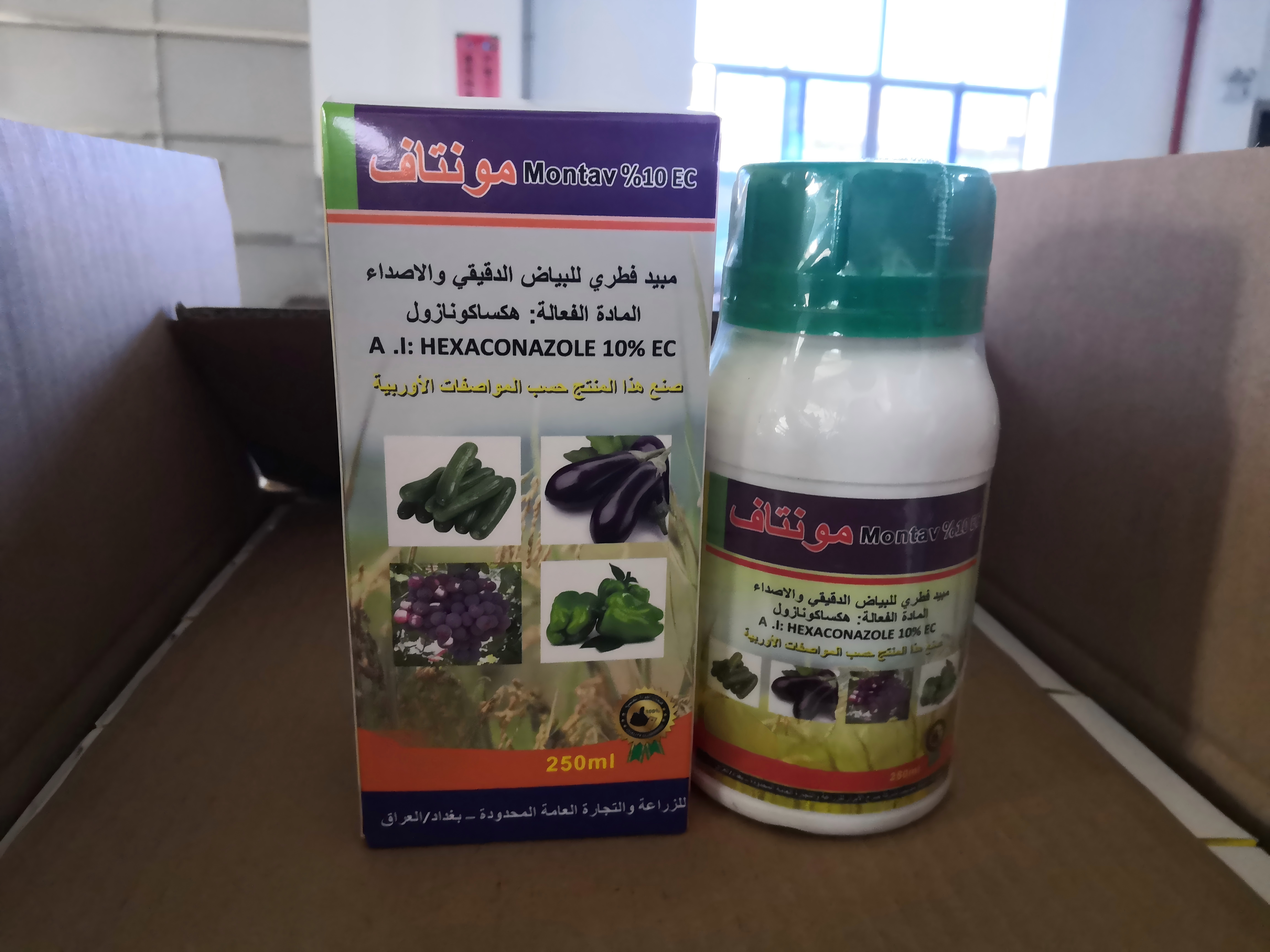
A highly effective, systemic triazole fungicide
primarily works by disrupting the synthesis of pathogen cell membranes to prevent and treat diseases.
1. Target Diseases
Hexaconazole has a broad fungicidal spectrum and is mainly used to control the following diseases caused by higher fungi:
Mainly controls: powdery mildew, rust, sheath blight, black spot, brown spot, rice blast, etc.
Applicable Crops: Widely used on rice, wheat, cucumbers, and other vegetables, as well as fruit trees such as apples and grapes.
2. Dosage and Administration
Rice Sheath Blight: 450-750 ml/ha
Wheat Powdery Mildew: 525-750 ml/ha
Rice False Trough: 525-750 ml/ha
Cucumber Powdery Mildew: 225-375 ml/ha
3. Formulation Suggestions
Hexaconazole can be combined with various fungicides with different mechanisms of action.
*Thiabendazole: Synergistic effect, primarily controlling gray mold, while also addressing powdery mildew and black spot.
*Fluazinam: Broadens the control spectrum, synergistically controlling multiple diseases, reducing pesticide costs.
*Cyprodinil: Significant synergistic effect, used for fruit tree and vegetable diseases, and various fungal diseases.
*Difenoconazole: Also a triazole, but still shows significant synergistic effect after combination, broadening the control range.
*Thifluzamide: Complementary advantages, broadening the fungicidal spectrum, effective against both rice sheath blight and fruit and vegetable diseases.
For example, powdery mildew, brown spot, rust, black spot, and anthracnose.
*Fluxapyroxad: Synergistic effect, primarily controlling rice blast and cucumber powdery mildew.
Post time: Jun-10-2026

