
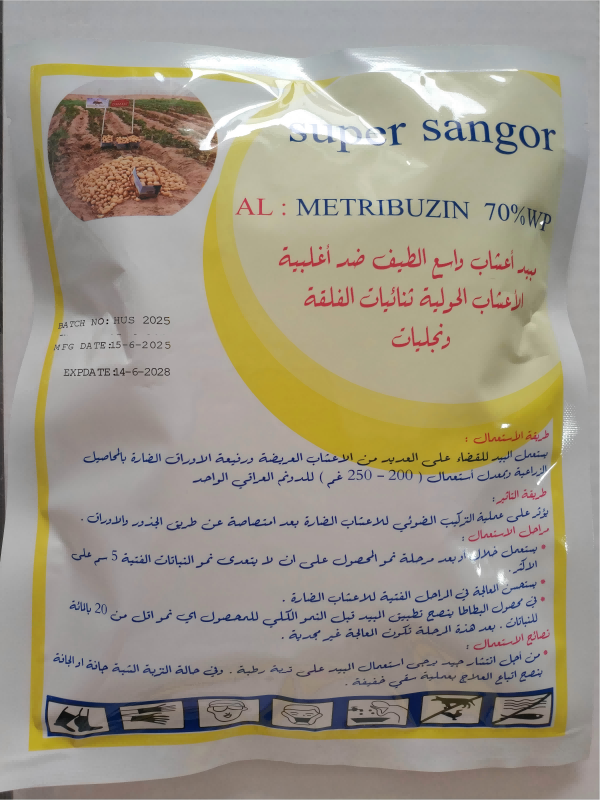
is a systemic selective triazine herbicide,
primarily killing weeds by inhibiting photosynthesis in sensitive plants.
It is commonly used in fields of soybeans, potatoes, tomatoes, etc., to control annual broadleaf weeds and some grassy weeds.
1. Mechanism of Action and Characteristics
Method of Action: Primarily absorbed through the roots of weeds, it is translocated upwards to the leaves via transpiration, inhibiting photosynthesis.
After application, weeds may emerge, but their leaves will gradually lose chlorophyll and turn yellow. Key characteristics:
Selectivity: Safe for crops such as soybeans and tomatoes, but selectivity varies significantly depending on the crop and soil type.
Soil Effects: Efficacy is significantly affected by soil organic matter content, moisture, and pH.
2. Main Application Areas and Target Crops
Main Crops: Soybeans, potatoes, sugarcane, tomatoes, asparagus, etc.
Target weeds: Primarily controls annual broadleaf weeds such as lambsquarters, knotweed, purslane, amaranth, cocklebur, and velvetleaf.
It also has some effect on some grassy weeds like barnyard grass and foxtail, but is largely ineffective against perennial weeds.
3. Dosage:
Apply 600-900 grams per hectare, diluted in 450-750 kg of water, and spray evenly onto the soil surface.
Soil requirements: Do not use or reduce dosage in sandy soils with less than 2% organic matter or severely alkaline soils (pH > 7.5).
Key conditions: Maintaining soil moisture is beneficial for efficacy.
Effectiveness is poor under dry conditions; shallow harrowing and mixing with the soil after application can improve effectiveness.
4. Precautions:
Impact on subsequent crops: After high-dose application, a 18-month interval is required before planting sugar beets and onions to avoid phytotoxicity.
Post time: Jun-01-2026

